

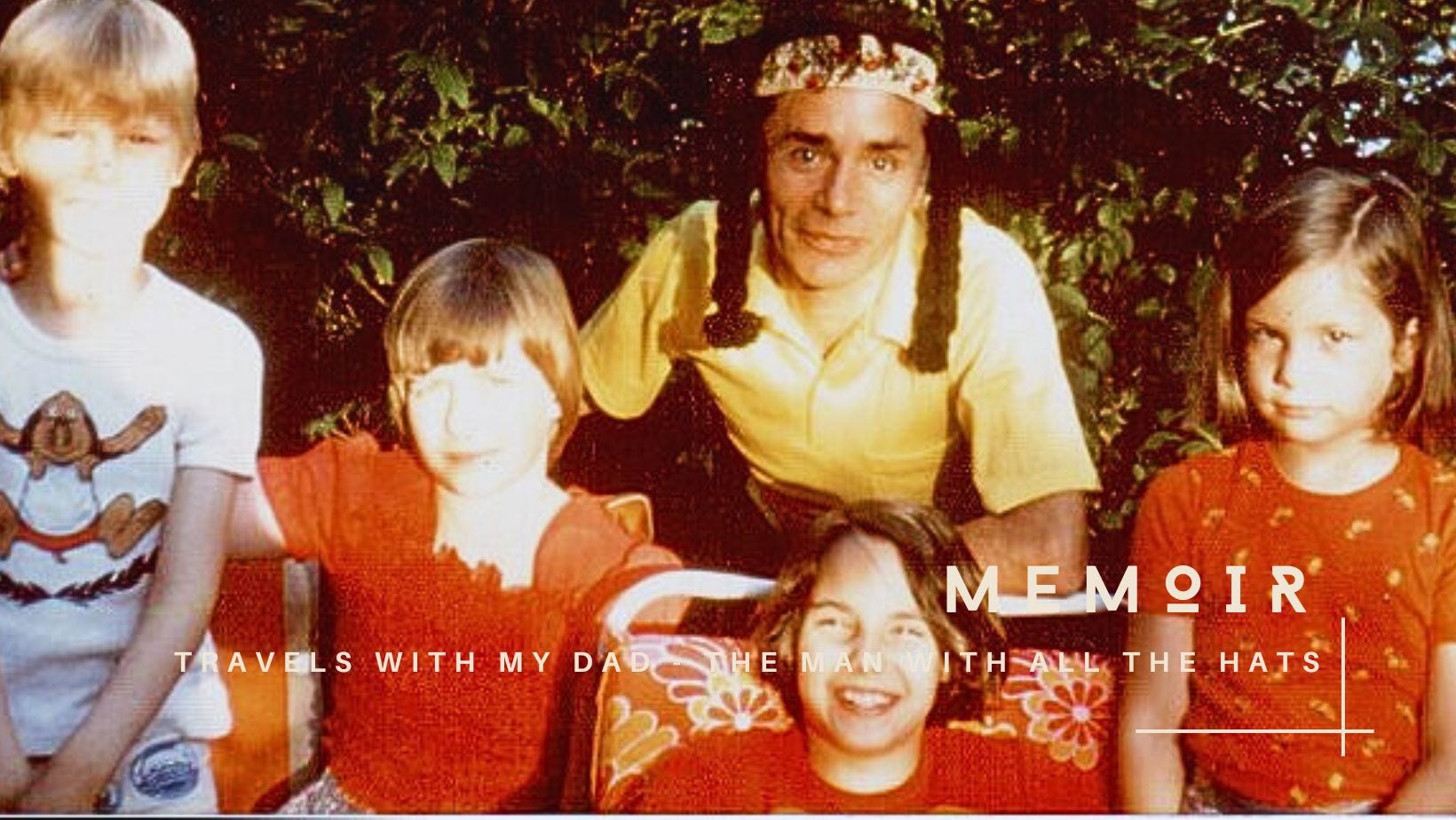
‘Ach, du heine!’ was a regular line delivered with an indulgent chuckle by my very stylish great aunt towards my dad. Basically, it’s a German expression which translates as ‘you’re such an ass’ - meant in the kindest of ways of course.
He could be a bit of an ass, an impish jokester, who laughed easily and occasionally liked to playfully stir the pot but never with truly spiteful or nasty intent. My mother, for example, spotted a new fridge magnet ahead of one of her mother’s visits which said, ‘Guests are like fish. After three days they stink.’ She was furious. He thought it was hilarious. Although of course there was some truth in it for him, it was just his weird way of trying to wind his mother-in-law up. They had their ups n downs and she, my granny, a feisty Scot who wasn’t terribly thrilled about her daughter marrying ‘a Jerry’, actually gave as good as she got. As rather rude and ill-conceived as his little joke was, there wasn’t a mean bone in his body. He was in the dog house for a while with my mum after that little incident.
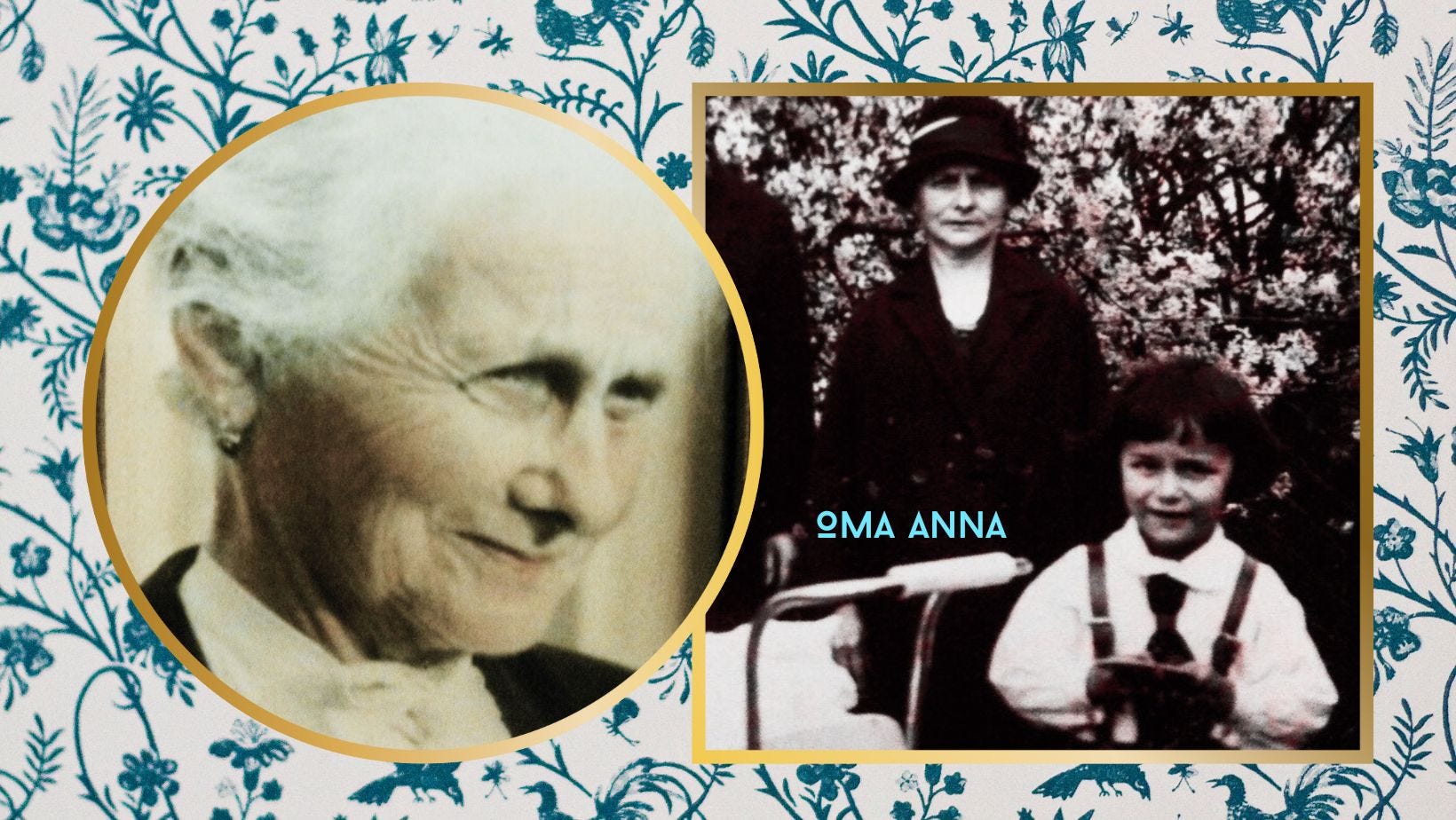
He’d had a bit of a rough early childhood but there are still stories of fun boyish antics. He grew up with his grandparents. (There’s a bit of background on this in an earlier post.) Old Henry had taken a bullet in WWI which caused him to lose an eye and earned him an Imperial German Wound Badge in Silver but it also turned him into a mean ol curmudgeon who never hesitated to wield his belt. His nastiness was somewhat softened and soothed by his wife, sweet Anna, who adored my dad and spoiled him. She smiled quietly with a twinkle in her eye, at his naughtiness, like when he’d nibble round the edges of the large sheet of butter cake when taking it up the road to the baker for baking in the large oven.
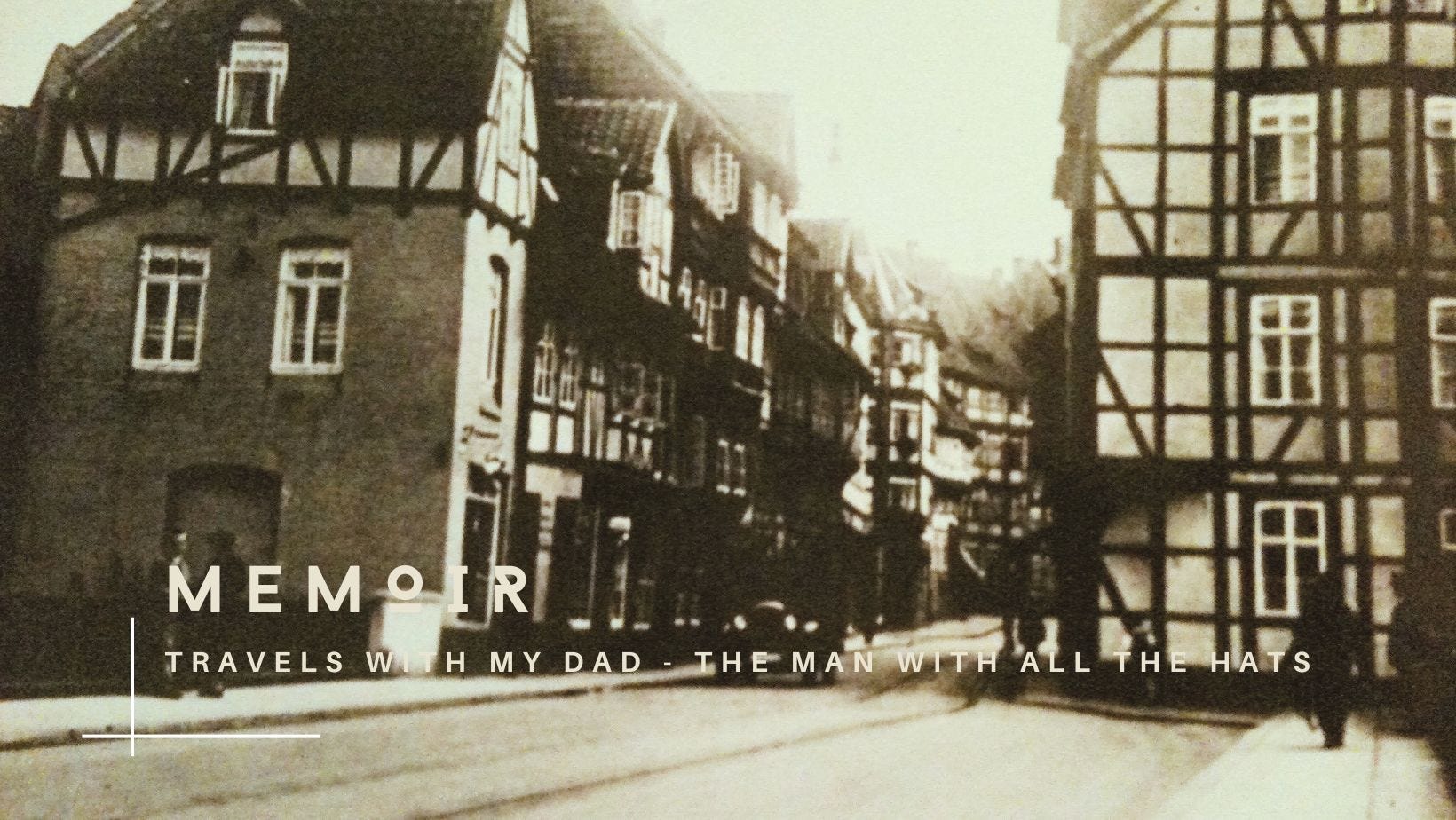
They lived in one of those large wooden houses, you know the traditional Fachwerk or half-timbered homes. It was next to the old bridge which crossed the Innerste river on Dammstraße, not far from the city centre. This area of town was known as klein Venedig (little Venice) because of the river and its little branching streams and the many little bridges. My dad and his mates would clamber about the banks of the river playing hide n seek or build forts in the bushes on the little island. His best mate was his school companion, Walter. Walter lived across the road from him, at the other end of the bridge above his father’s book shop (although possibly the family lived in a house round the corner), and they’d often climb over walls together to steal fruit from the neighbour’s orchard. Incidentally, now in his late 90s, Walter is still going and working. He took over his father’s shop after the war and established one of Germany’s leading publishing houses, Georg Olms Verlag.
,_Hildesheim,_Hanover,_Germany-LCCN2002713747.jpg)
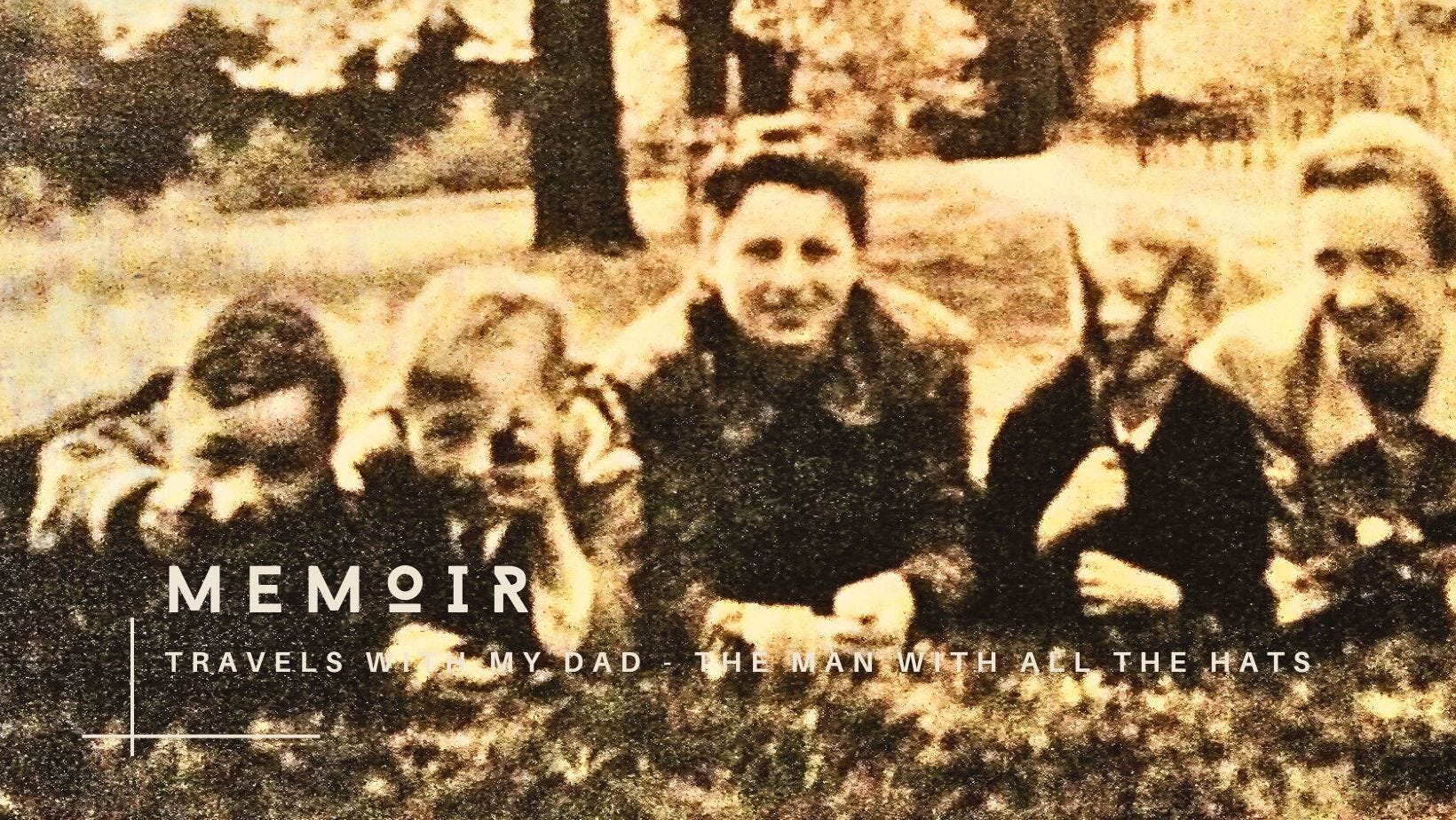
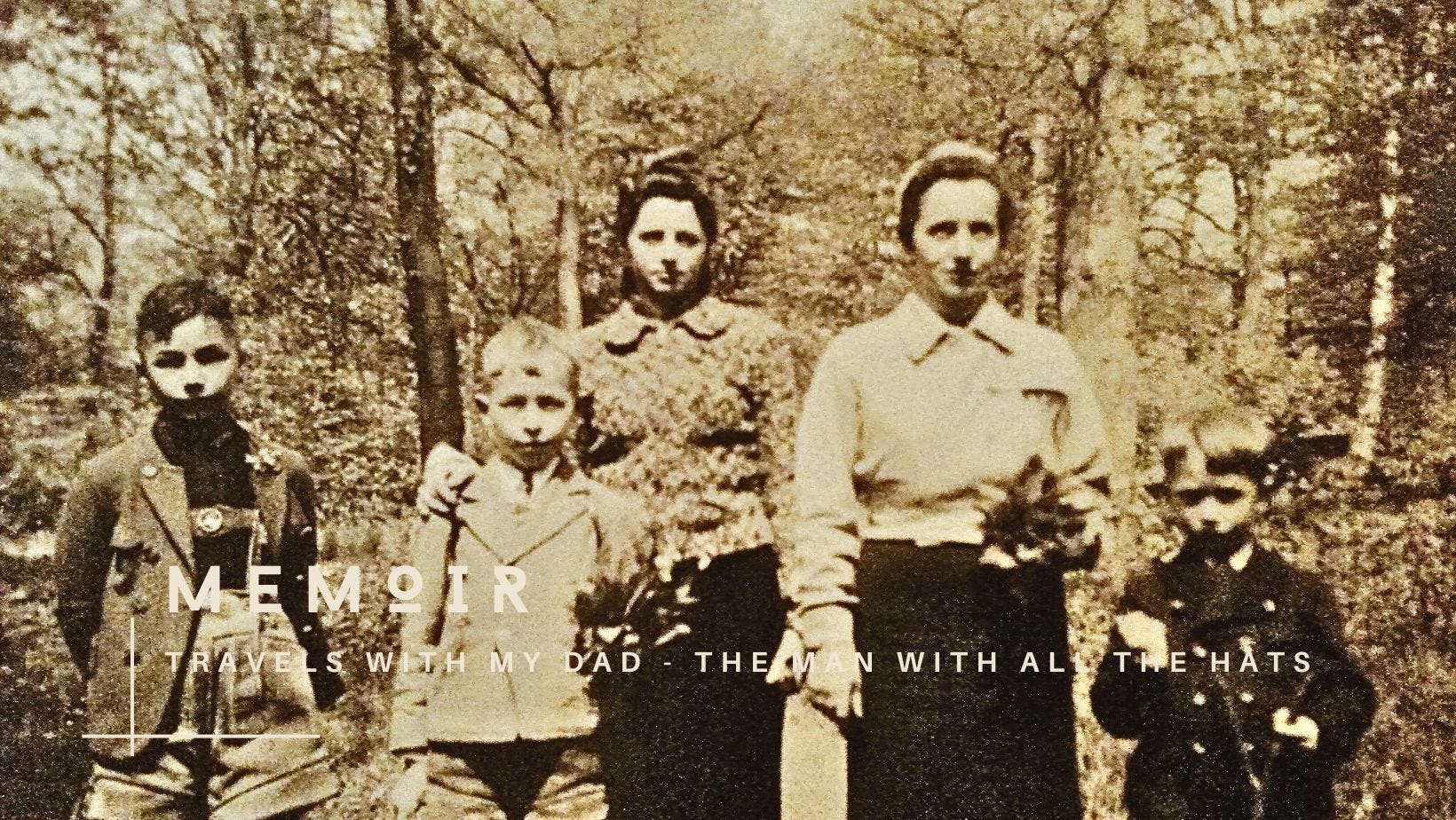
Most weekends my dad’s closest cousins, G and J, would visit and there’d be walks together in the nearby forested hills where the boys would mess about running through the pine forest playing cops n robbers, probably inspired by G and J’s father who was a policeman, or building fairy houses with twigs, or chasing little forest fauna. There are some old pics below of him (far left) with his two cousins, their other aunt, and his mother (my Omi) on such an outing. The aunt, Gretchen, was the youngest of Henry and Anna’s children and just 14 years older than my dad so she was like a big sister in many ways for him growing up. She’s the one who frequently called him an ass. My Omi, Lieschen, was the third of four sisters. Of the two older sisters, Bertschen was the mother of G and J and also a little girl, and the other sister, Friedchen, lived in East Germany. Only one of their three brothers, Fritz, survived into adulthood.
My dad remained close with Walter and his cousins and, of course, his aunts, throughout his life and we always saw them on our summer visits with my Omi.
This was in the town of Hildesheim, one of the oldest cities in Northern Germany. It sits on the River Innerste mentioned above, probably from about 815 when it became the seat of the Bishopric of Hildesheim. It’s a really quaint old town and delightfully walkable. It was an important market on the medieval Hellweg trade route, granted market rights by King Otto III in 983, and has a lovely old market square where I often used to go for fresh quark, potatoes, kohlrabi, and other farm fresh groceries with my Omi on market day. Most of it had to be rebuilt after the war with several buildings remodelled after the original. Really beautiful old 13th Century half-timbered buildings! There are also lots of churches around town, including the Hildesheim Cathedral with its 1000 year old rosebush and the St. Michael's Church which earned Hildesheim status as a UNESCO World Heritage Site in 1985. My high school sat just behind St Michael’s so I passed it every day when I lived with my Omi and occasionally we went there to music events. On my road to school there’s also the rather famous Roemer and Pelizaeus Museum (RPM) which has a permanent ancient Egypt and ancient Peruvian exhibitions. Lots to see for such a little place!
Hildesheimers live with the shame of some ugly history during WWII. Apart from the horrific pograms of the late 30s, in 1945 a sub-camp of Bergen-Belsen was established there where about 500 Jewish prisoners were sent to rebuild railways. Partly because of the camp and numerous munitions storage warehouses in the area, there were 8 bombings of Hildesheim that final year of the war by American and British air raids. The last bombing on 22 March 1945 destroyed much of the old city centre and market in 18 minutes.
That last one also destroyed my dad’s childhood home. Omi barely got her parents, Henry and Anna, out in time; leading them out of the basement and into a little boat that she then dragged, swimming, across the Innerste away from the burning building. My dad was in Berlin by the time this happened, at the end of the war, on the verge of being captured by the Russians, but a story for another time.
I often think, now as an adult, that much of his fondness for fun and laughter, for play, was a way of healing from and coping with the nasty bits of his childhood and the traumas experienced during the war. You would never have guessed from his easy-going, relaxed, light-heartedness that he’d suffered so much pain in his life. He rarely talked about it.
As a father, he brought a joyful quirkiness and fun to our life even if occasionally he took risk a teensy bit too far but he never pushed or insisted. He did love to play and was often kind of goofy really - whether it was dressing up for something, or painting our front concrete walk green so it blended with the grass, or building a snow fort in the shape of a VW beetle on the front lawn in winter, or climbing up look out posts in the forest to watch for deer in summer, or mooing out the window at cows on slow Sunday drives along the coast. He was happiest, I think, when playing in nature.
I have fond memories of playful summer evenings with my dad growing up in Canada. Us kids in our neighbourhood often used to play hide and seek around dusk before we all had to go in for dinner. It was a fairly quiet residential area in Halifax and we’d hide in the bushes between the old wooden houses or disappear behind the giant chestnut trees which lined the street and my dad was always game to join in the fun.
One of my favourite memories though is from a summer escapade in Germany in the mid 70s while on one of our long summer visits with my Omi. She lived in a quiet, one-way, U shaped street in Hildesheim full of five storey, post war, apartment blocks and there was little traffic. Omi had lived there since the post war reconstruction; first at number 6 with her parents and then, later, on her own at number 14 where she opened her atelier as a tailor.
There were over 20 kids living around the U, ranging in age from 4 to 18, who hung out and played together on the street every day. We played what we called ‘abwerfen’ (a kind of dodgeball) a lot and swung from the long strands of the willow tree outside Omi’s building and generally just ran about like wild things. When it rained, we’d huddle together under a first floor balcony and tussle with the boys over whose space it was. We were closely watched at all times by all of the elderly women who lived on the street - mostly widows or spinsters - and whose curtains regularly twitched as we played. Occasionally, one would stick her head out a window and shout at us to be quiet or get out of the garden or off the wall.
One afternoon, I think I was 11 at the time, a group of us girls decided to go to the cinema to see the newly released film ‘The Omen’ and convinced my dad to take us. It was a short 20 minute walk to the cinema in the centre of town and off we set - a merry little girl band, giggling, skipping, and singing. We didn’t get far before we noticed that there was a small rabble of 6-7 boys on our tail which included my first crush. When they saw we’d caught on to them, they scrambled to hide themselves.
My dad suggested we make a game of it and, like some kind of pied piper of Hamelin, led us on a dance through the back roads of town to the cinema. We went down to the banks of the Innerste and followed him along a rocky trail into klein Venedig, his old stomping ground, and then into the little lanes and alleyways, ducking and diving into doorways to hide from the boys. The boys kept pace and we just couldn’t shake them. I don’t know if they even knew where we were going or that we were going to the cinema. Regardless, they too threw themselves into the game. They followed us to the cathedral and its 1000 year old rosebush, weaving in and out of the arches, and then finally to the cinema. How we laughed!
The boys settled themselves in a row behind us and threw popcorn at our heads throughout the film. Of course, we pretended to be annoyed but really were quite thrilled by the attention and the whole adventure. The popcorn probably also helped to make the film less scary given we were all between 8-14 years old at the time. My dad just left us to it with a twinkle in his eye. I don’t recall him even coming into the cinema with us. More than likely he disappeared to enjoy a couple of hours in one of his favourite pastimes on our summer visits - a trip to a local spa for a mud bath.
My dad was in his late 40s when he led us on that little gleeful jaunt. He kept his youthful spirit and remained playful to the end when he passed at 70.
We don't stop playing because we grow old; we grow old because we stop playing. ~ George Bernard Shaw (quote from the The Strong National Museum of Play website in NY)
Thanks for joining me on this little trip down memory lane and travels with my dad. If you liked this, there are more stories in the Memoir section of my Notes from Sardinia Substack.
As always, it would be lovely to hear from you dear reader so drop me a line in the comments and feel free to share some of your own dad tales!
Take care!
F ox
If you enjoyed my little musings here, please click on the heart at the bottom or the top of this post. It helps others discover the Memoir section of Notes from Sardinia, and also, of course, sparks my joy!
PS Come visit The Citrus Grove website or follow us on Instagram.
Unless external credit given, all images copyright Fiona Pape.